
Are Estonians Who Lived Abroad Different?
If you want a surprisingly accurate “stress test” for Estonia, try this: how long can you go without saying a single word while still functioning normally?
In many countries, that would be impossible. In life in Estonia, it’s… genuinely doable. You can pick up a ticket number, show an ID card, sign a paper, and leave—without speaking.
That tiny detail says a lot about the culture: efficient, quiet, and often emotionally reserved on the surface. But what happens when an Estonian leaves, lives abroad, and then comes back?
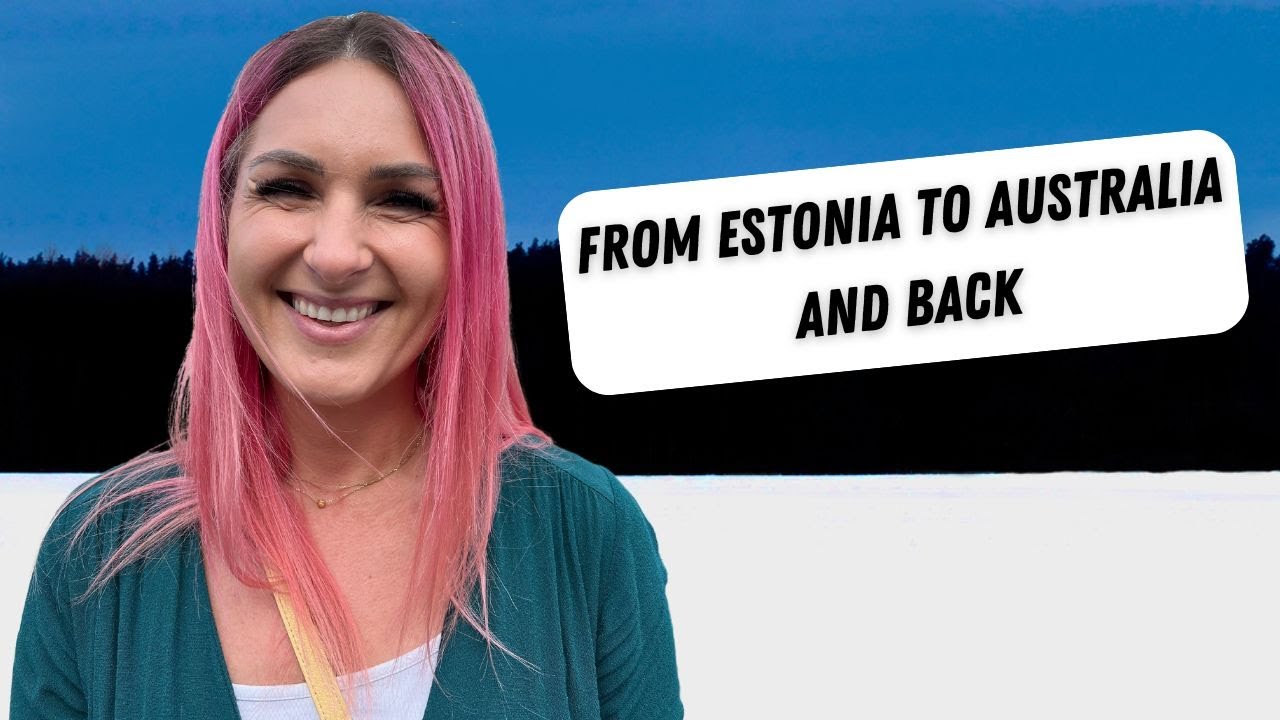
In the YouTube episode “Are Estonians who Lived Abroad Different? Life in Estonia 06”, Manon speaks with Keddy—an Estonian born at the exact moment Estonia regained independence (August 20), raised in South Estonia, later living in Australia, traveling widely, and returning to build a life back home with her Australian partner.
What comes out of their conversation isn’t just a travel story. It’s a practical, honest look at how living abroad changes Estonians, and what that means for foreigners trying to build a real life in Estonia.
1) Growing Up in 90s Estonia: “We’ve Come a Very Long Way”
Keddy grew up in South Estonia at a time when daily life was hard in a way that’s difficult to imagine if you only know modern Estonia as “the digital nation.”
She describes the 90s as a constant struggle—limited money, limited opportunities, and very few “modern” comforts. She remembers periods when her parents didn’t have money for food, and the family would go to the forest to pick berries to eat.
That contrast matters because it explains something central to life in Estonia today:
Older generations often carry a deep memory of scarcity.
Younger Estonia looks modern, fast, and internationally aware.
Both realities exist at the same time inside the same small country.
And it also explains why “quiet” in Estonia doesn’t always mean “cold.” Sometimes it means: don’t complain, don’t stand out, handle it.
2) North vs South Estonia: The Rivalry Isn’t Just a Joke
Manon brings up the classic internal rivalry: North Estonia (Tallinn and surroundings) versus South Estonia.
Keddy explains it through identity and opportunity:
The North has “more to do,” more jobs, more movement.
The South is often romanticized as fields, forests, and a simpler life.
But the real issue is opportunity—many towns shrink because there’s less work, and people leave.
She also points out how remote work (especially after COVID) changes the equation. If you can work online, suddenly the “simple nature life” becomes possible again without sacrificing your career.
That’s a major trend within Estonia right now: modern careers + rural calm, as long as the job is flexible.
3) Australia Broke the “Estonian Life Script”
Keddy’s explanation of why Australia changed her is one of the clearest “lived abroad vs never lived abroad” contrasts in the whole episode.
She describes the standard Estonian script (the one many people grew up with):
Study hard
Go to university
Get a “good job”
Work for decades
Then she lands in Australia and ends up working a physically repetitive factory job—12-hour night shifts, six days a week—something she initially felt embarrassed to admit.
But an Australian woman at a barbecue reacts in a way that shocks her: admiration, respect, pride. Not status judgment.
That moment cracks something open:
In some cultures, your job title is your value.
In others, doing your job well is already respectable.
And once that belief changes, you don’t return to Estonia the same person.
4) The Real Gift of Living Abroad: Unlearning Yourself
Manon says something that hits the core of the whole topic:
Living abroad isn’t mainly about learning new things.
It’s about unlearning the invisible conditioning you didn’t even know you had.
When you remove the familiar layers—family, language, culture, your “role” in your home society—you face a blunt question:
Who am I without all that?
That process can be uncomfortable, but it creates a stronger foundation. You become responsible in a new way—because there is nobody to blame. Dirty dishes? Your fault. Misplaced keys? Your fault. Bureaucracy problems? You deal with it.
This is one reason Estonians who lived abroad often come back different: they return with a more flexible identity and a less rigid social script.
5) Reverse Culture Shock in Estonia Is Real (and Brutal)
If culture shock is hard, reverse culture shock can be worse—because you expect home to feel easy.
Keddy describes returning to Estonia as emotionally crushing at first. She says she cried every day and felt like she was sliding into depression. Even simple interactions felt hostile.
One scene captures it perfectly: she goes to buy a phone, the shop is empty, she approaches the counter, and the staff member says: “Take a number.”
No explanation. No warmth. Just procedure.
To an Estonian who never left, that’s normal.
To someone returning from a talkative, socially open culture, it can feel like rejection.
This is a key insight for life in Estonia:
Estonia isn’t always “rude.”
Estonia is often low-emotion, low-small-talk, high-efficiency.
But if you come from a culture where small warmth is expected, Estonia can feel sharp.
6) The “Expats Bubble” Problem: Why People Leave Estonia
Keddy and Manon talk about something almost every foreigner in Estonia eventually hits:
It’s hard to make local friends.
Not impossible—but slow.
And when you can’t break into local circles, you fall into a familiar pattern:
Work friends become your only friends
Your social life becomes your job
You stop building a real life outside work
Eventually, you burn out and leave
They describe it well: there are “bubbles” in Estonia—company bubbles, expat bubbles, university bubbles—where foreigners can live for years without truly touching local life.
This is why some people do 2–3 years in Estonia, then move on. Not because Estonia is bad—because belonging is hard without deep roots.
7) The Only Real Way to Make Friends in Estonia: Time
Manon gives one of the best metaphors in the conversation:
Making friends in Estonia is like growing a plant.
You can’t rush it. You can only:
show up consistently
water it (small repeated contact)
give it sunlight (shared activities)
wait
Keddy reinforces the same idea: Estonians can be closed at first, but once you’re in, you’re in. Then you’re not a “friend,” you’re almost family—introduced forever as “that guy from Pakistan,” “that friend from Australia,” and so on.
So if you’re building life in Estonia as a foreigner, the strategy is not “networking.” It’s long-term presence.
8) Practical Advice for Foreigners in Estonia (From an Estonian Who Returned)
Keddy’s advice is simple and useful:
Find a hobby group
Not a networking event. Not a “let’s socialize” meetup.
A real activity-based group where you share something concrete: sports, climbing, dance, volunteering, language exchange, board games—anything that gives Estonians a reason to let you in gradually.
Because in Estonia, shared context often matters more than “being friendly.”
Prepare for February
Everyone warns you about the cold. Fewer people warn you about the dark.
The darkness can be the real challenge in Estonia. Their suggestion: plan a warm break around February if you can. Even a short escape helps.
9) Are Estonians Who Lived Abroad Different?
Yes—often in a few predictable ways, based on what this episode shows:
They tend to be less status-driven
Because they’ve lived in places where work dignity isn’t tied to prestige.
They’re usually more open to difference
Because they’ve been the outsider. They know what it feels like to not understand the rules.
They often become “bridges”
They bring ideas back—food, habits, social attitudes, and even just a different emotional tone.
And in a small country like Estonia, even small changes matter.
Keddy says it clearly: Estonia needs good people and needs to make them stay. With only about a million locals, every person who integrates well changes the country a little.