

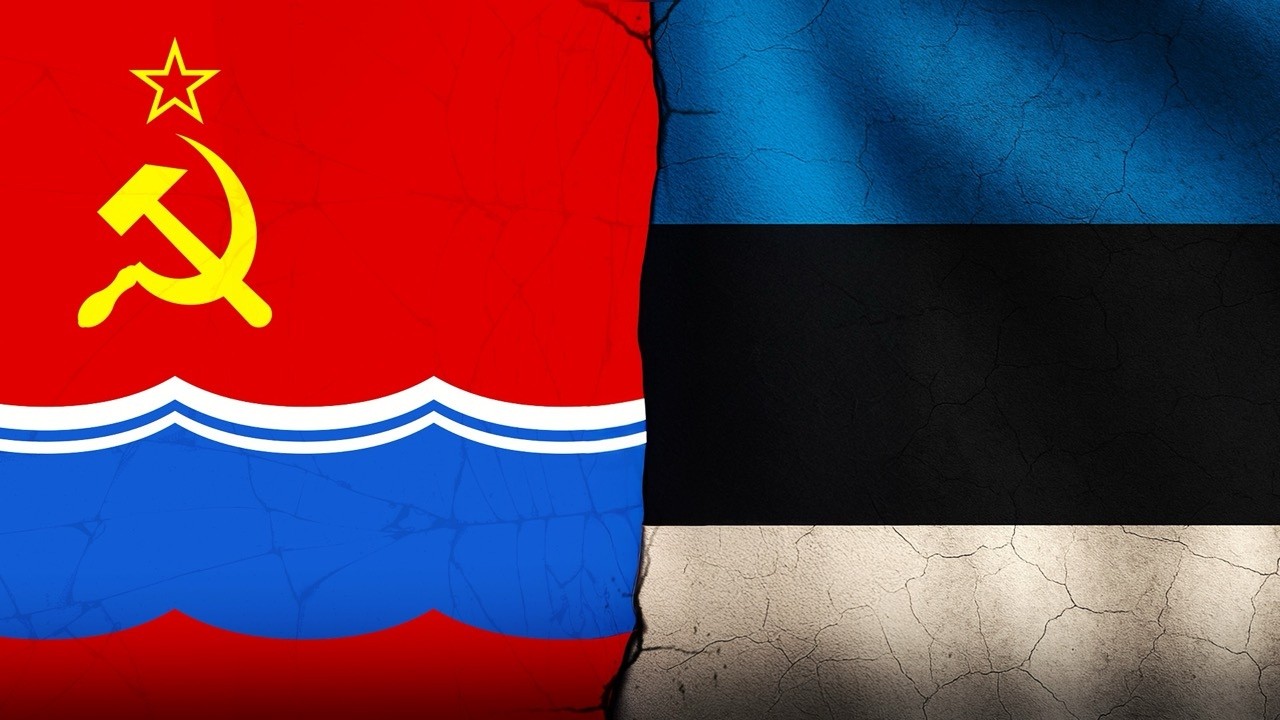

How Soviet Occupation Changed Estonia Forever
Estonia today is often presented as a digital success story.
E-government. Online voting. Startups. Unicorns. Efficiency.
But if you want to understand life in Estonia beyond the branding, you need to look deeper. Almost fifty years of Soviet occupation didn’t disappear in 1991. It didn’t vanish with independence or EU membership. It stayed—quietly, persistently—shaping how Estonia looks, sounds, and behaves.
Not in abstract history books.
But in demographics. Language. Architecture. Social behavior. Even customer service.
To truly understand Estonia, you need to see the Soviet fingerprints still pressed against the glass.
Here are five ways Soviet occupation continues to shape life in Estonia today.
1. Demographics: A Country Reshaped from the Inside
When Estonia regained independence in 1991, nearly one in three residents was not ethnically Estonian.
That was not an accident.
After World War II, the Soviet Union deliberately relocated workers, soldiers, and administrators from across the USSR into Estonia. In 1939, Estonians made up about 90% of the population. By 1989, that number had dropped to 62%. Nearly half a million people were moved into the country during Soviet rule.
Entire cities changed overnight.
Narva is the most striking example. Destroyed during the war, it was rebuilt and repopulated almost entirely by Russian-speaking settlers. Today, around 95% of Narva’s population is Russian-speaking. Walk its streets and you’ll see Cyrillic signs, hear Russian pop music, and feel closer to a Soviet satellite city than a traditional Estonian town.
Behind these numbers is trauma.
Between 1940 and the early 1950s, at least 10% of Estonia’s population was killed, imprisoned, or deported. On June 14, 1941 alone, nearly 10,000 people—mostly women and children—were sent to Siberia. Fewer than a third ever returned.
This forced replacement of people left scars that still shape attitudes, trust, and identity in Estonia today.
2. Language: Survival, Resistance, and a Bilingual Reality
Language is one of the most visible legacies of Soviet rule in Estonia.
During occupation, Russian was the language of power. Estonian was pushed aside—used at home, but sidelined in schools, factories, and administration. If you lived in Soviet Estonia, you had to know Russian.
Today, Estonian is the sole official language. But Russian never disappeared.
About 29% of residents consider Russian their mother tongue, and roughly two-thirds of the population understands or speaks it. In many parts of Estonia, especially in the northeast, it’s possible to live your entire life without fluent Estonian.
After independence, Estonia chose language revival—not revenge. Citizenship required passing Estonian language exams, which many Soviet-era settlers struggled with. In 1992, nearly 32% of residents were stateless. Over time, that number dropped to under 8% through education programs and eased rules.
The result is a unique linguistic reality.
Many Estonians are bilingual. Many Russian-speakers are increasingly fluent in Estonian. The languages mix—even casually—into everyday speech. Soviet pressure weakened Estonian, but independence strengthened it without erasing the past.
That balance defines modern life in Estonia.
3. Architecture: Soviet Skeletons, Nordic Faces
Fly over Tallinn, Tartu, or Kohtla-Järve and you’ll see them immediately: endless gray apartment blocks.
These prefabricated Soviet buildings—panelkas—were built between the 1960s and 1980s. Cheap. Uniform. Fast. Today, about two-thirds of Estonian households still live in them.
They solved a housing crisis—but created new problems.
Thin walls. Poor insulation. Aging infrastructure. A quiet heaviness that many residents feel but rarely describe. These buildings are now older than many of the people living inside them.
Estonia’s response hasn’t been demolition—it’s renovation.
The government aims to upgrade 80% of all buildings by 2050, including around 14,000 Soviet-era blocks. Districts like Mustamäe show what’s possible: colorful facades, modern insulation, elevators, even solar panels—Soviet bones with a Nordic exterior.
Some structures remain unresolved symbols. Tallinn’s Linnahall—an enormous Soviet concrete monument—still sits abandoned by the sea. Protected. Debated. Unloved. Impossible to ignore.
That tension mirrors Estonia’s relationship with its past.
4. Mindset: Silence, Caution, and Quiet Resilience
Talk to older Estonians and you’ll often hear one phrase:
“Watch who’s listening.”
That instinct comes straight from Soviet times, when speaking freely could cost you your job—or your freedom. That caution didn’t vanish in 1991.
Even today, many Estonians avoid public confrontation. Major economic pressures—like rising living costs—spark petitions, not protests. Over 80% worry about finances, yet street demonstrations remain rare.
This silence is often misunderstood.
It’s not apathy. It’s historical conditioning.
At the same time, Soviet scarcity bred ingenuity. Estonians became masters of DIY—fixing cars, renovating apartments, solving problems independently. Community cooperation survived quietly through housing cooperatives and shared responsibility.
The younger generation is slowly changing this. More open. More vocal. More emotionally expressive. The shadow remains—but it’s receding.
5. Customer Service: A Lingering Cultural Hangover
Under communism, stores had no competition—and no incentive to be friendly.
There’s an old Soviet joke that shop assistants greeted customers like personal enemies. That mentality didn’t disappear overnight.
Even today, customer service in Estonia often feels cold to outsiders. Cashiers may not smile. Eye contact can be minimal. Politeness exists—but warmth is optional.
This isn’t hostility. It’s cultural inheritance.
Since the 2000s, service standards have improved significantly—especially in IT, tourism, and among younger workers. But compared to Western Europe or North America, Estonia still lags.
The difference lies in expectation: in Estonia, the customer is not king. The customer is… present.
So Where Does That Leave Estonia?
Soviet occupation shaped Estonia profoundly—but it didn’t define its future.
Estonians overturned Soviet work culture.
They built digital systems rooted in trust.
They defended their independence when it mattered most.
History explains behavior—but it doesn’t excuse stagnation.
If the past still controls how a society acts, then freedom is incomplete. And Estonia, more than most, has shown it can change.
Understanding life in Estonia means holding both truths at once:
The weight of history—and the quiet strength to move beyond it.
The shadow is still there.
But it no longer owns the country.


Thanks , I’ve just been looking for info about this subject for ages and yours is the best I’ve discovered till now. But, what about the bottom line? Are you sure about the source?