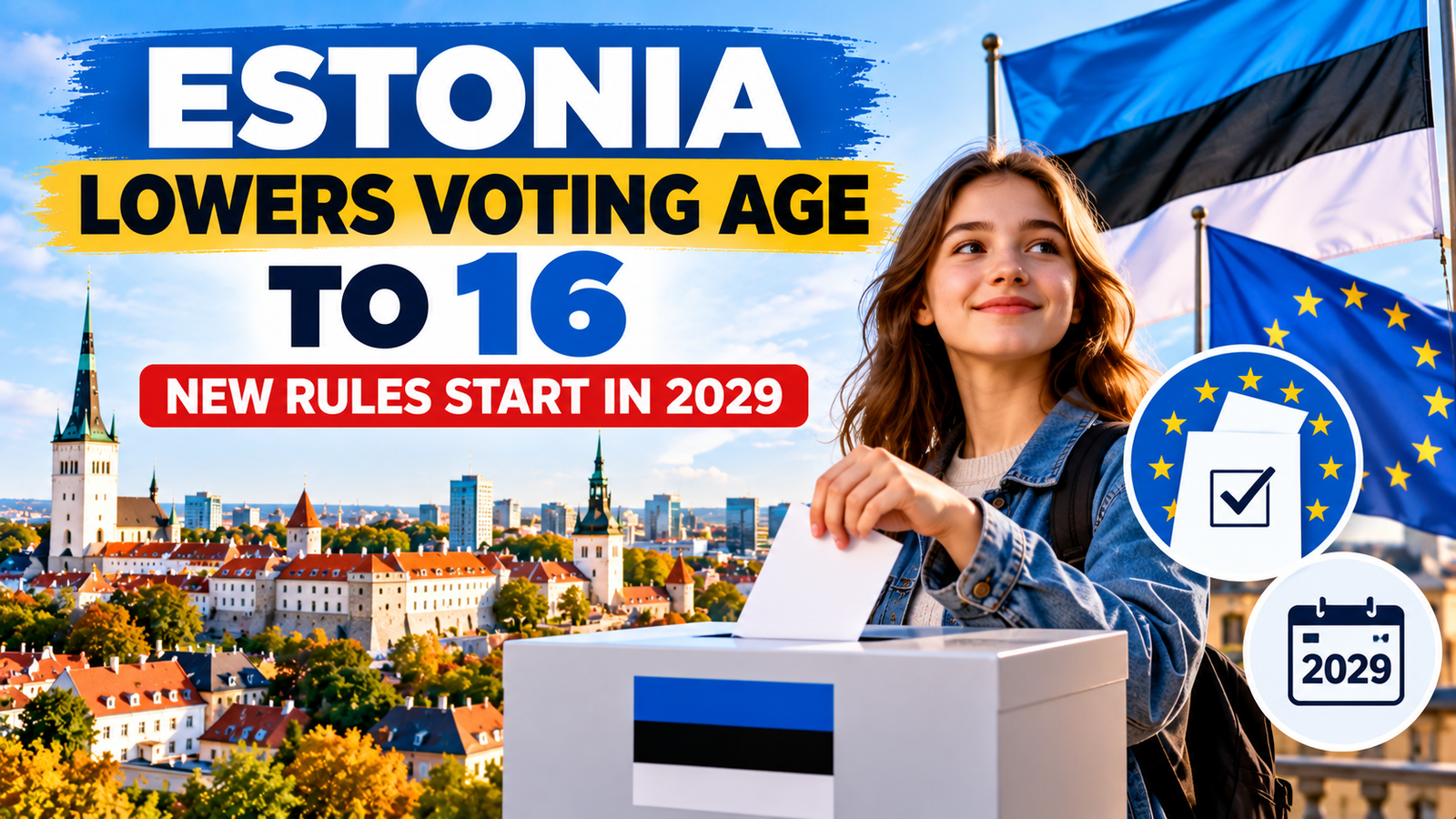

Estonia has taken a significant step toward expanding youth participation in European democracy. On 26 October 2026, President Ülle Madise signed legislation allowing Estonian citizens to vote in European Parliament elections from the age of 16 and stand as candidates from the age of 18.
The change lowers the previous voting age of 18 and candidacy age of 21 for these elections. The new age limits are scheduled to apply from 2029, giving younger Estonians a greater opportunity to participate in European political life.
For people following Estonia news, European politics and the country’s changing society, this is an important development to understand.

What Has Changed in Estonia?
The new legislation changes the minimum age requirements for European Parliament elections in Estonia.
| Election requirement | Previous age | New age |
|---|---|---|
| Voting in European Parliament elections | 18 | 16 |
| Standing as a candidate | 21 | 18 |
The reform concerns European Parliament elections. It should not be interpreted as automatically changing the age requirements for every type of election in Estonia.
The law was signed by President Ülle Madise as the first piece of legislation of her presidential term, which began on 12 October 2026.
When Will the New Voting Rules Take Effect?
The new age limits are scheduled to apply from 2029. This means eligible 16- and 17-year-old Estonian citizens will be able to vote in the next European Parliament elections under the revised rules.
The change gives schools, families and civic education organisations time to help younger people understand how European elections work and how decisions made at the European level can affect everyday life.
Why Is Estonia Making This Change?
Lowering the voting age creates an opportunity for younger citizens to become involved in democratic decision-making earlier.
European Parliament decisions cover issues that can affect young people’s futures, including education, employment, digital services, climate policy and consumer protection.
Allowing younger citizens to vote may also encourage more discussion about political participation at home and in schools. However, the actual effect on turnout and political engagement will become clearer only after the new rules are used in an election.
What Does This Mean for Young People in Estonia?
For eligible young citizens, the change offers an earlier opportunity to participate in European elections.
Young people can begin preparing by learning about:
How the European Parliament works.
The responsibilities of elected representatives.
The main policy issues discussed during European elections.
How to evaluate political claims and compare candidates’ proposals.
Official voter registration and election information.
The reform also highlights the importance of media literacy. Understanding different viewpoints, checking sources and distinguishing verified facts from misleading claims can help first-time voters make informed decisions.
Does the New Law Apply to All Residents of Estonia?
No. The announcement concerns Estonian citizens and their participation in European Parliament elections.
Foreign residents, international students and expatriates should not assume that the new age limits automatically grant them voting rights. Eligibility for European Parliament elections depends on the applicable citizenship, residence and election rules.
Anyone who wants to confirm their eligibility should consult Estonia’s official election authorities before an election.
Who Is Estonia’s New President, Ülle Madise?
Ülle Madise became Estonia’s president on 12 October 2026, succeeding Alar Karis. Before taking office, she served as Estonia’s Chancellor of Justice from 2015 to 2026 and built a career in constitutional law, public administration and legal scholarship.
Her background in constitutional law makes her presidency particularly relevant to people following Estonia’s institutions, legislation and democratic processes.
The new voting-age legislation is an early example of the laws that will be associated with her term. Its long-term impact will depend on implementation and how younger citizens participate when the new rules take effect.
What Should International Readers Know?
Estonia is a member of the European Union, and European Parliament elections form part of its democratic system. Changes to election rules can influence how citizens participate in decisions affecting the wider European community.
For international readers, the reform is also a useful reminder that legal and political developments can change over time. People planning to study, work or relocate to Estonia should follow official government announcements rather than relying solely on social media posts or headlines.
For the latest information, consult Estonia’s official presidential website and the country’s election authorities.
Final Thoughts
Estonia’s decision to lower the voting age for European Parliament elections marks an important change in how younger citizens can participate in European democracy. From 2029, eligible Estonian citizens will be able to vote from age 16 and stand as candidates from age 18.
The next important step will be seeing how the change is implemented and whether it encourages more young people to engage with European politics.
Follow Life in Estonia for more updates on Estonia’s current affairs, government decisions, economy, education, technology and everyday life.